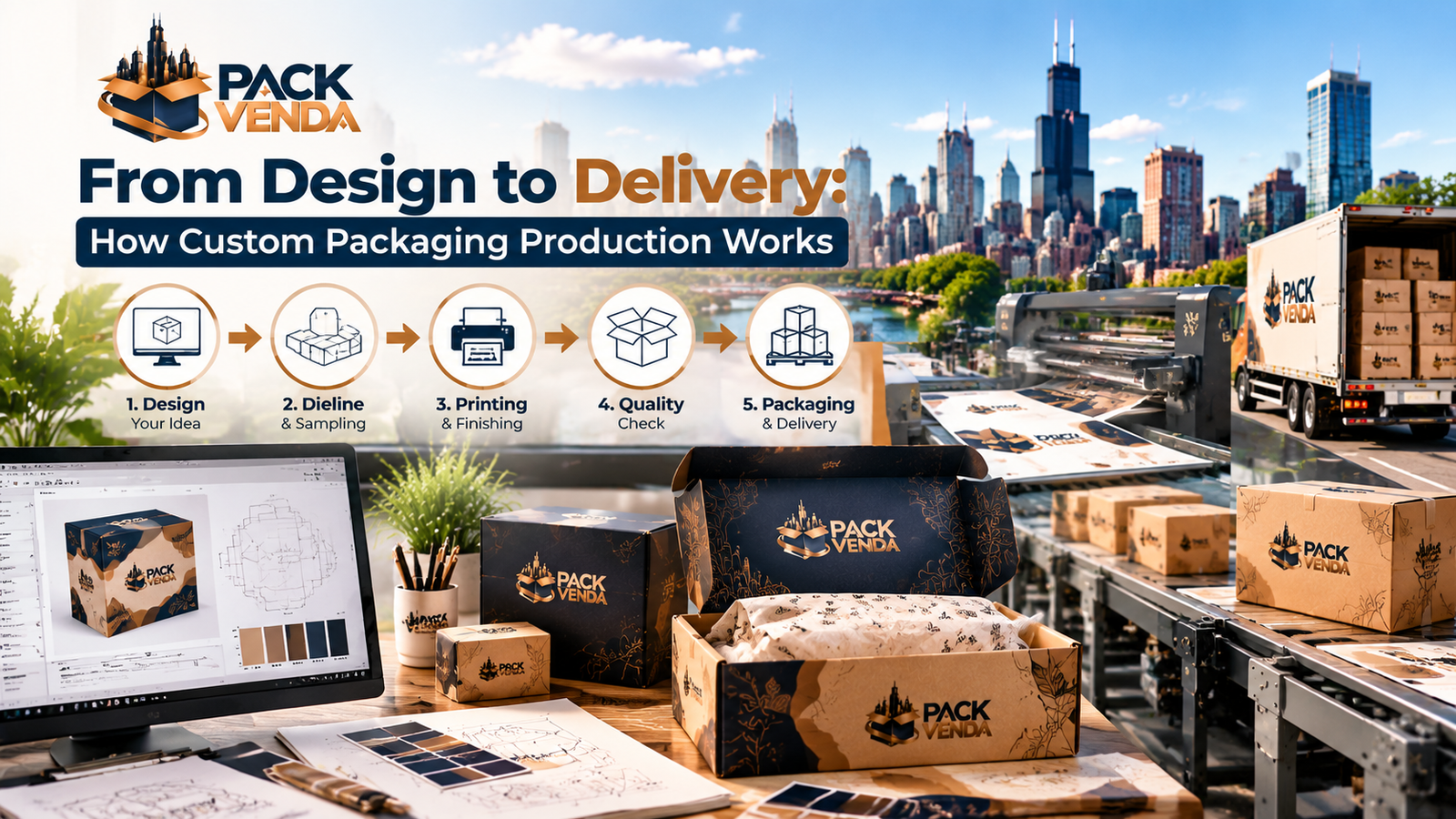
Creating custom packaging involves much more than selecting a box and adding a logo. A successful packaging project requires planning, design, material selection, production, and quality control.
The custom packaging process helps businesses create packaging that protects products, represents their brand, and improves the customer experience.
Understanding how packaging moves from an initial idea to a finished product helps businesses make better decisions when planning their packaging projects.
What Is The Custom Packaging Process?
The custom packaging process is the complete journey of creating packaging designed specifically for a product or brand.
It usually includes:
- Understanding product requirements
- Selecting packaging styles
- Creating designs
- Choosing materials
- Producing packaging
- Checking quality
- Delivering finished products
Each step plays an important role in creating effective packaging.
Step 1: Understanding Your Packaging Requirements
Every packaging project starts by understanding the product and business goals.
Before production begins, businesses need to consider:
- Product size and weight
- Packaging purpose
- Shipping requirements
- Brand goals
- Quantity requirements
- Customer experience expectations
This information helps determine the right packaging solution.
Step 2: Choosing The Right Packaging Style
Different products require different packaging structures.
Businesses may choose from options such as:
Custom Boxes
Flexible packaging solutions designed for different products, industries, and branding needs.
Mailer Boxes
Popular for ecommerce businesses because they combine protection with a professional presentation.
Rigid Boxes
Premium packaging options used for luxury products that require an elegant appearance.
Folding Cartons
Lightweight packaging solutions suitable for many retail products.
Step 3: Packaging Design And Development
Design is where packaging ideas become visual concepts.
The design process considers:
- Brand identity
- Product requirements
- Customer experience
- Printing options
- Structural design
A good packaging design balances appearance and functionality.
Businesses can customize elements such as:
- Colors
- Logos
- Artwork
- Finishes
- Box structure
Step 4: Selecting Materials And Finishes
Materials affect packaging appearance, durability, and performance.
Businesses can choose materials based on:
- Product protection needs
- Brand positioning
- Budget
- Sustainability goals
Finishing options can help create a unique presentation.
Examples include:
- Matte finishes
- Gloss finishes
- Embossing
- Foil details
- Custom inserts
Step 5: Creating Samples And Approving Designs
Before full production, reviewing packaging samples helps businesses evaluate the final design.
Sample review allows businesses to check:
- Box size
- Material quality
- Printing accuracy
- Product fit
- Overall appearance
This step helps identify improvements before production begins.
Step 6: Packaging Production
After design approval, the packaging moves into manufacturing.
Production involves:
- Preparing materials
- Printing designs
- Cutting packaging structures
- Applying finishes
- Assembling components
Professional production processes help maintain consistency across packaging orders.
Step 7: Quality Checking
Quality control ensures packaging meets expected standards before delivery.
During quality checks, packaging can be reviewed for:
- Print quality
- Structural accuracy
- Material performance
- Overall appearance
Consistent quality helps businesses deliver better customer experiences.
Step 8: Final Delivery
Once production is complete, finished packaging is prepared for delivery.
The final packaging should be ready to support:
- Product storage
- Shipping needs
- Customer presentation
- Brand experience
Why A Professional Packaging Process Matters
A structured packaging process helps businesses avoid common issues such as:
- Incorrect sizing
- Poor material selection
- Weak product protection
- Inconsistent branding
Working through each stage carefully creates packaging that supports both business and customer needs.
Common Packaging Mistakes Businesses Should Avoid
Choosing Packaging Based Only On Price
The cheapest option may not always provide the right protection or presentation.
Ignoring Product Requirements
Packaging should be designed around the product, not just appearance.
Overlooking Customer Experience
Packaging influences how customers perceive a brand after purchase.
Skipping Design Testing
Reviewing packaging concepts before production helps avoid costly changes.
Industries That Use Custom Packaging
Custom packaging production supports many industries, including:
Ecommerce
Online brands use packaging to improve shipping experiences.
Beauty & Cosmetics
Beauty companies use premium packaging to enhance product presentation.
Jewelry
Jewelry brands use elegant packaging for protection and luxury appeal.
Retail
Retail businesses use branded packaging to improve product visibility.
Frequently Asked Questions
How long does the custom packaging process take?
The timeline depends on packaging type, design complexity, materials, and production requirements.
Can packaging designs be customized?
Yes. Businesses can customize packaging size, structure, printing, materials, and finishing options.
Do businesses receive samples before production?
Sample options can be discussed before production to review packaging design and quality.
What information is needed to start a packaging project?
Businesses usually need product details, packaging requirements, quantity, design preferences, and branding information.
Create Packaging Designed For Your Brand
A successful packaging project starts with the right process. From design development to final delivery, every step helps create packaging that protects products and strengthens brand identity.
Pack Venda helps businesses develop custom packaging solutions based on their product requirements and brand goals.
Ready to start your packaging project? Request a custom quote today.